APPLICATION SOLUTION / ENGINEERING REVIEW
GNSS Integration for Engineering and Mining Vehicles
Plan GNSS integration for mining, construction and heavy off-road vehicles by documenting antenna placement, receiver requirements, platform interfaces and navigation output. The review must also record vibration, shock, dust, temperature, cable routing, large metal structures and the evidence required before any candidate configuration is considered.
For a general integration framework, see the GNSS anti-jamming technology overview.
Use the mining vehicle GNSS engineering-input checklist to prepare receiver, installation and evidence details before an RFQ.
Mining trucks and heavy off-road machines place GNSS hardware inside a wider control, telemetry and positioning architecture. The engineering record should distinguish navigation support from any safety function, document interference and installation constraints, and keep certification, measured performance and platform suitability open until verified evidence is available.

Engineering context: Engineering & Mining Vehicles is a conceptual application illustration. Confirm antenna placement, receiver interfaces, frequency bands, channel and array requirements, installation constraints and environmental conditions before selecting any candidate configuration.
SYSTEM ARCHITECTURE FLOW
GNSS Integration Path for Mining and Heavy Vehicles
A generic engineering reference for documenting the GNSS signal path and platform integration boundaries. It does not represent a deployed customer system.
01
GNSS antenna
Placement, mounting envelope and signal environment.
02
Receiver / processing
Interfaces, channels, power and data requirements.
03
Mitigation review
Interference conditions and review constraints.
04
Vehicle controller
Platform interface, control boundary and installation review.
05
Dispatch / survey output
Documented navigation, survey, automation or system output.
Conceptual engineering reference — subject to engineering review.
Operational context and integration visuals

Operational Context: review the signal environment, mounting envelope, cable route and platform constraints. This conceptual illustration is not a customer photograph or deployment record.
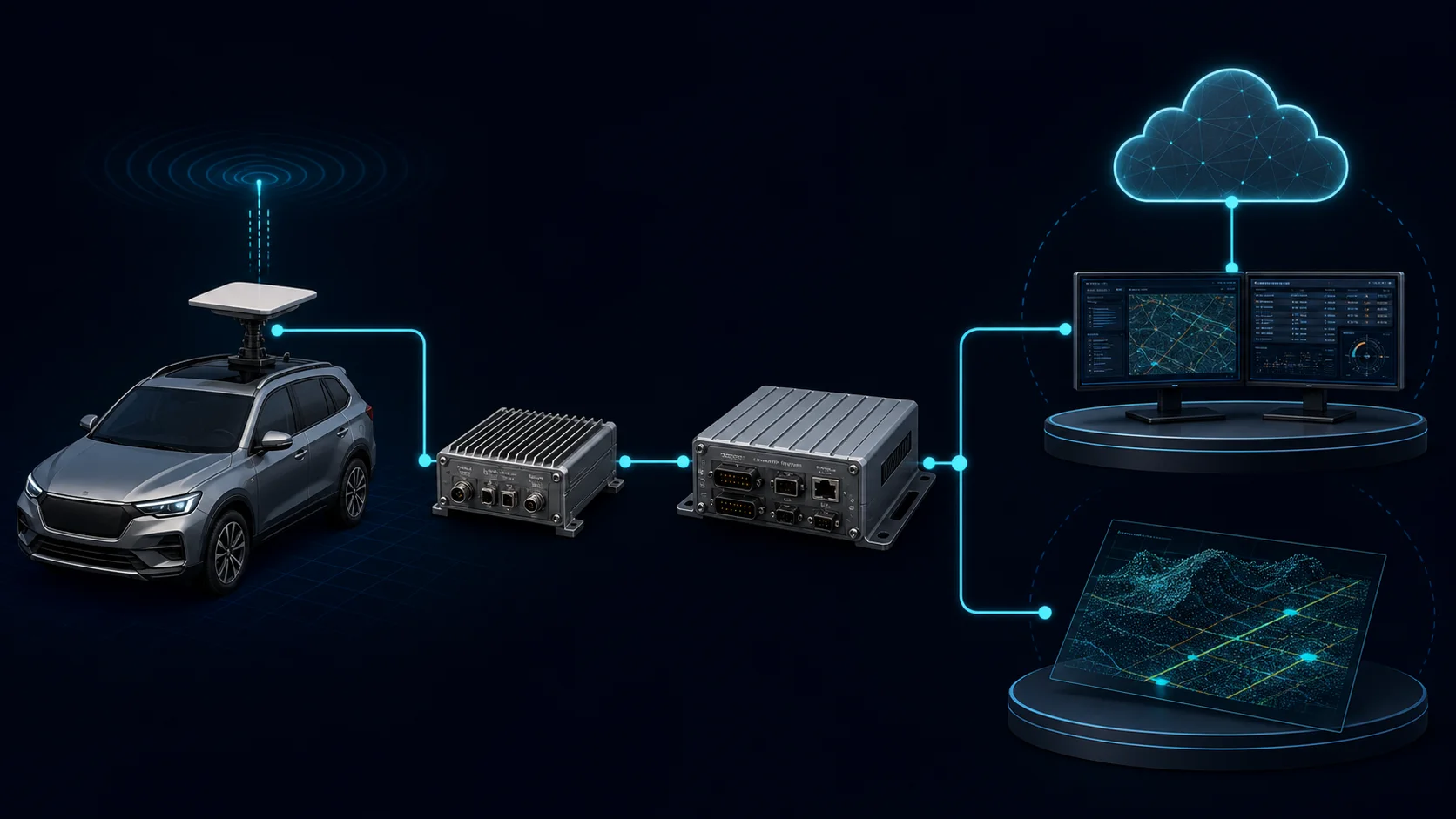
Reference Architecture / Integration: use this diagram to document antenna, receiver, platform control and navigation data relationships. Final suitability remains subject to engineering review.
Why GNSS Integration Needs a Vehicle-Level Review
Engineers should map the antenna position against haul-road obstructions, booms, buckets, cabins and service equipment. The receiver may feed a controller, remote-monitoring system, positioning logger or operator display, each with different timing and interface expectations. Cable protection and service access deserve the same attention as RF performance.
Heavy equipment integration benefits from separating environmental evidence from marketing language. A machine may experience repeated shocks, dust ingress, pressure washing, welding activity and electrical transients across its service life. The review should identify whether the antenna is mounted on a cab, counterweight, mast or protected bracket and how service technicians reach it. Long cable routes need strain relief and a defined grounding approach. Remote monitoring and positioning logs may require different update rates or status handling than a vehicle controller. The final engineering record should preserve open questions about ingress, temperature, shock and vibration until verified documentation is available.
Mining Vehicle Operating and RF Environment
Heavy equipment often has noisy alternators, traction drives and long power harnesses. A documented installation review should identify likely self-interference, metallic shadowing and maintenance damage modes. Environmental claims must be tied to verified product data rather than assumed from the application.
System boundary
The antenna, receiver, controller, data path and installation environment should be reviewed as one boundary. A candidate configuration is not a verified assignment to a particular platform.
Engineering teams should maintain a simple requirements register: operating environment, receiver architecture, frequency and constellation needs, mounting, cable and interface constraints, power behavior, service access and evidence status. This register helps distinguish a question that can be answered from verified product data from one that requires an installation or system review.
Receiver, Controller and Navigation Data Path
Signal and data path
Document the path from the RF environment through antenna and receiver to controller and navigation output. Record interfaces, power, timing, status handling and maintenance access.
Installation, Interference and Environmental Evidence
Before selecting a candidate, record vibration and shock evidence, enclosure and ingress requirements, temperature range, connector protection, grounding, cable routing and power transients. Confirm the receiver channel architecture and the required constellation and frequency bands. Unknown values remain open engineering questions.
Installation and RF Environment
Review obstruction, multipath, self-interference, cable routing, grounding, vibration, temperature and service access. The applicable limits must come from verified records.
A useful review separates the physical installation from the receiver configuration and from the platform software behavior. It should identify which observations are expected during normal operation, which conditions indicate degraded reception and which logs or measurements are required for a later decision. This is a planning method, not a performance guarantee.
Acceptance Evidence Before Product Selection
Separate requirements, assumptions and evidence. Establish an acceptance checklist for mounting, receiver settings, interfaces, power and data behavior. Do not convert a conceptual illustration into a claim of deployment or measured performance.
Product Selection Inputs for Mining Vehicles
| Engineering question | Why it matters | Information needed before RFQ |
|---|---|---|
| Receiver and bands | Determines compatibility and channel planning. | Receiver model, constellations, frequency bands. |
| Mounting and environment | Controls obstruction, vibration, cable and maintenance risk. | Location, envelope, temperature, shock, ingress evidence. |
| Interfaces and power | Connects navigation output to the platform. | Connector, cable, supply, protocol and status behavior. |
After documenting the requirements, review the published GNSS anti-jamming product catalogue; the catalogue does not confirm platform fit or availability.
After the receiver, signal, interface and installation requirements are documented, engineering may review RN-009Pro-8CH-G1-WG-DT, RN2504-3T7A21C-WG-DT, RN-8AT-FULL-KGR-34V or RN2511-16A-SNB as candidate configurations only. Each still requires confirmation against the receiver, environment and installation record.
What to Include in a Mining Vehicle GNSS RFQ
- Define operating environment and platform role.
- Identify receiver, constellation, frequency and channel requirements.
- Confirm mounting, cable, interface, power and maintenance constraints.
- Provide quantity, schedule, destination and documentation needs.
Frequently Asked Questions
What is this application?
This page frames the Engineering & Mining Vehicles scenario for engineering review and platform integration.
What integration problem does it address?
It addresses the relationship between antenna, receiver, platform interfaces, installation and the operating RF environment.
What should an engineer confirm before selecting a GNSS anti-jamming antenna?
Confirm receiver compatibility, frequency and constellation requirements, element and channel architecture, mounting, power, connectors and environmental evidence.
What information should be included in an RFQ?
Include platform type, application, receiver, installation constraints, quantity, target schedule, destination region and documentation needs.