APPLICATION SOLUTION / ENGINEERING REVIEW
Custom OEM GNSS Integration
This guide supports an engineering review of GNSS anti-jamming antenna and terminal integration for OEM programs. It connects receiver selection, mechanical packaging, interfaces, power, cable routing and change control with the platform requirements that must be documented, keeping verified product data separate from assumptions about an unapproved modification before a configuration is accepted.
When an OEM review requires a published 4-element, 4-channel anti-jamming and anti-spoofing version, use the RN2501-AJS-4CH-DPA product page to check documented signals, mechanical limits and RFQ inputs before discussing any custom change.
For a general integration framework, see the GNSS anti-jamming technology overview.
OEM programs introduce product definition, receiver selection, mechanical packaging, interfaces, power, cable routing and change control. A custom integration review must keep verified product data separate from assumptions about an unapproved modification. Sampling, engineering changes and production introduction are process questions that should be documented before a configuration is accepted. This application page is an engineering review guide for GNSS anti-jamming antenna and terminal integration. It does not claim a certified deployment, measured detection rate, customer project, guaranteed accuracy or suitability without confirmation. The design task is to connect the antenna, receiver, platform controller and navigation output while documenting interference sources, installation constraints and verification items.

Engineering context: Custom OEM GNSS Integration is a conceptual application illustration. Confirm antenna placement, receiver interfaces, frequency bands, channel and array requirements, installation constraints and environmental conditions before selecting any candidate configuration.
SYSTEM ARCHITECTURE FLOW
Custom OEM integration path
A generic engineering reference for documenting the GNSS signal path and platform integration boundaries. It does not represent a deployed customer system.
01
GNSS antenna
Placement, mounting envelope and signal environment.
02
Receiver / processing
Interfaces, channels, power and data requirements.
03
Mitigation review
Interference conditions and review constraints.
04
Customer platform
Platform interface, control boundary and installation review.
05
System validation output
Documented navigation, survey, automation or system output.
Conceptual engineering reference — subject to engineering review.
Operational context and integration visuals

Operational Context: review the signal environment, mounting envelope, cable route and platform constraints. This conceptual illustration is not a customer photograph or deployment record.
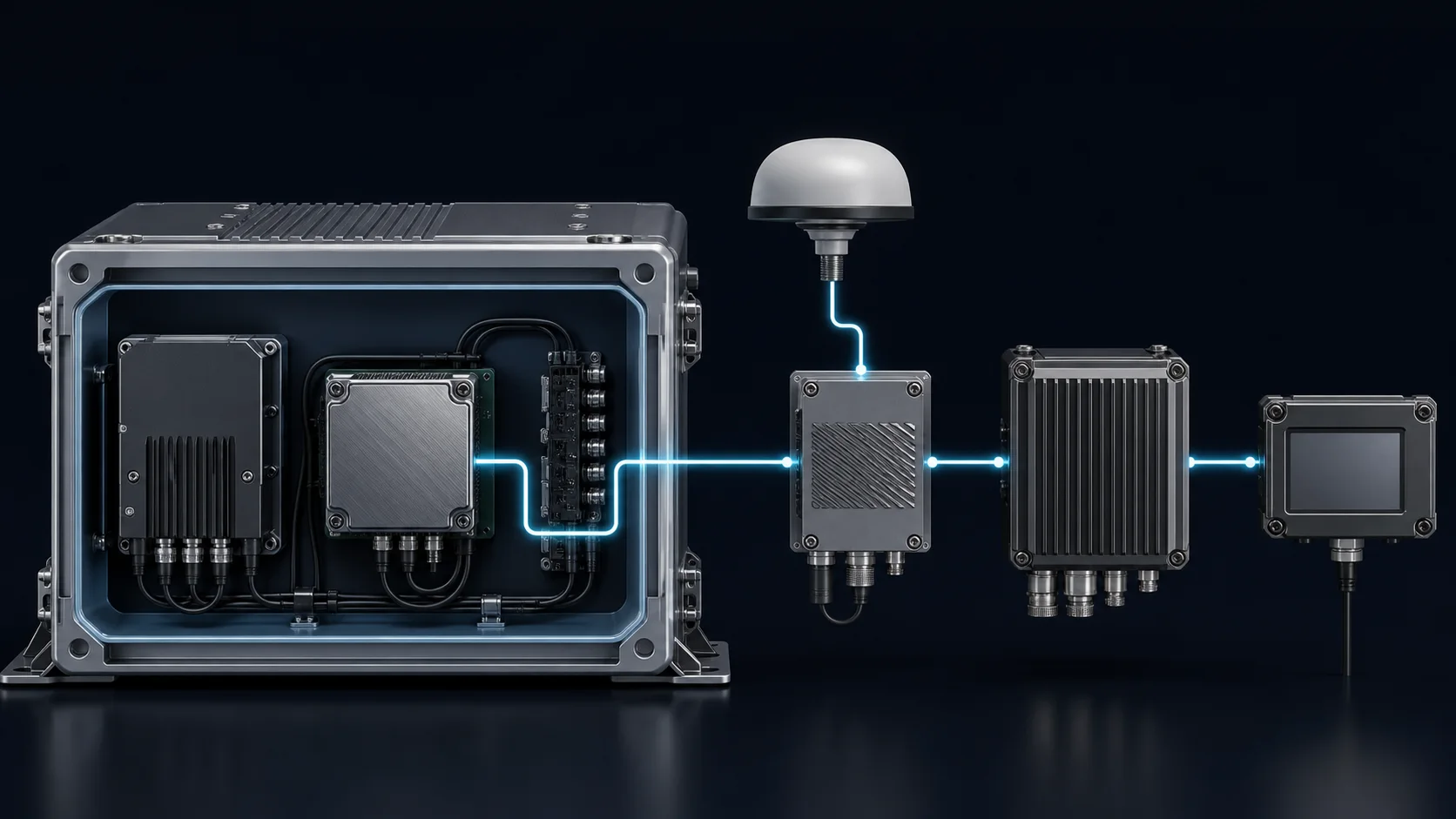
Reference Architecture / Integration: use this diagram to document antenna, receiver, platform control and navigation data relationships. Final suitability remains subject to engineering review.
Why this application matters
Start with the OEM platform architecture: receiver, antenna, enclosure, connector, power input, data interface, mounting datum and service method. Identify which requirements are fixed and which are open for engineering review. Supplier drawings, verified parameters and installation evidence should be traceable to the candidate configuration.
OEM integration needs disciplined ownership of requirements and evidence. The receiving platform team should identify the interface contract, enclosure datum, connector choice, power budget, cable drawing and change-control process. A sample or candidate configuration is not automatically a production-approved design. The review should distinguish verified product parameters from requested customization and identify which party supplies validation data. Quantity and schedule information help frame the enquiry but do not constitute a delivery commitment. Engineering changes, documentation revisions and production introduction should be confirmed through the appropriate commercial and technical process.
Operational Context
An OEM review benefits from a controlled comparison table and a change log. The team should identify interface ownership, validation responsibilities and the boundary between a candidate configuration and an approved design. Final suitability must be confirmed against verified product data and system requirements.
System boundary
The antenna, receiver, controller, data path and installation environment should be reviewed as one boundary. A candidate configuration is not a verified assignment to a particular platform.
Engineering teams should maintain a simple requirements register: operating environment, receiver architecture, frequency and constellation needs, mounting, cable and interface constraints, power behavior, service access and evidence status. This register helps distinguish a question that can be answered from verified product data from one that requires an installation or system review.
System Architecture
Signal and data path
Document the path from the RF environment through antenna and receiver to controller and navigation output. Record interfaces, power, timing, status handling and maintenance access.
Integration Challenges
Record quantity, target schedule, destination region, receiver type, frequency and constellation requirements, connector and cable needs, enclosure constraints and documentation expectations. Do not promise a custom range, delivery date, certification or production capability without an approved scope.
Installation and RF Environment
Review obstruction, multipath, self-interference, cable routing, grounding, vibration, temperature and service access. The applicable limits must come from verified records.
A useful review separates the physical installation from the receiver configuration and from the platform software behavior. It should identify which observations are expected during normal operation, which conditions indicate degraded reception and which logs or measurements are required for a later decision. This is a planning method, not a performance guarantee.
Engineering Considerations
Separate requirements, assumptions and evidence. Establish an acceptance checklist for mounting, receiver settings, interfaces, power and data behavior. Do not convert a conceptual illustration into a claim of deployment or measured performance.
Product Selection Guidance
| Engineering question | Why it matters | Information needed before RFQ |
|---|---|---|
| Receiver and bands | Determines compatibility and channel planning. | Receiver model, constellations, frequency bands. |
| Mounting and environment | Controls obstruction, vibration, cable and maintenance risk. | Location, envelope, temperature, shock, ingress evidence. |
| Interfaces and power | Connects navigation output to the platform. | Connector, cable, supply, protocol and status behavior. |
After documenting the requirements, review the published GNSS anti-jamming product catalogue; the catalogue does not confirm platform fit or availability.
What to Confirm Before RFQ
- Define operating environment and platform role.
- Identify receiver, constellation, frequency and channel requirements.
- Confirm mounting, cable, interface, power and maintenance constraints.
- Provide quantity, schedule, destination and documentation needs.
Frequently Asked Questions
What is this application?
This page frames the Custom OEM GNSS Integration scenario for engineering review and platform integration.
What integration problem does it address?
It addresses the relationship between antenna, receiver, platform interfaces, installation and the operating RF environment.
What should an engineer confirm before selecting a GNSS anti-jamming antenna?
Confirm receiver compatibility, frequency and constellation requirements, element and channel architecture, mounting, power, connectors and environmental evidence.
What information should be included in an RFQ?
Include platform type, application, receiver, installation constraints, quantity, target schedule, destination region and documentation needs.
Prepare a documented GNSS integration discussion
Use a published standard product when its documented configuration can be reviewed against the target platform. Begin a Custom OEM discussion when receiver architecture, GNSS signal requirements, RF integration, available space, interface or power constraints, environmental conditions, quantity or project stage require technical confirmation before selecting a candidate configuration. This is a requirements-review path, not a promise of an unconfirmed modification, certification, performance result or delivery outcome. Providing the available project inputs early allows the discussion to focus on published product information and the questions that still need engineering clarification.
Information to include before requesting a quote
- Platform, application context and operating environment
- Required GNSS constellations and bands
- Receiver, RF, mechanical-space, interface and power requirements
- Environmental constraints and any available drawings or requirement files
- Prototype, evaluation, quantity and project-stage information
Review Applications, published products and About ResiNav, then Discuss Your GNSS Requirements.