APPLICATION SOLUTION / ENGINEERING REVIEW
GNSS Integration for Industrial Robotics and Automation
GNSS integration for industrial automation uses satellite navigation as one input for outdoor robots, yard vehicles and other mobile industrial platforms. Plan antenna placement, receiver interfaces, timing, validity flags, RF exposure and fallback behavior before hardware selection. Because availability may be limited indoors or near metal structures, treat GNSS as part of the platform architecture rather than a universal indoor positioning solution. This engineering guide does not demonstrate a certified deployment, measured performance, customer project or guaranteed suitability.

Engineering context: Industrial Robotics & Automation is a conceptual application illustration. Confirm antenna placement, receiver interfaces, frequency bands, channel and array requirements, installation constraints and environmental conditions before selecting any candidate configuration.
SYSTEM ARCHITECTURE FLOW
Where GNSS Fits in an Industrial Automation System
In an automation architecture, the antenna and receiver supply navigation data to a PLC, robot controller or edge computer. The controller must distinguish valid, degraded and stale data, then invoke the documented fallback when satellite navigation is unavailable. The reference flow defines these boundaries; it is not a deployed customer system.
01
GNSS antenna
Placement, mounting envelope and signal environment.
02
Receiver / processing
Interfaces, channels, power and data requirements.
03
Mitigation review
Interference conditions and review constraints.
04
Automation controller
Platform interface, control boundary and installation review.
05
Robot / automation output
Documented navigation, survey, automation or system output.
Conceptual engineering reference — subject to engineering review.
Operational context and integration visuals

Operational Context: review the signal environment, mounting envelope, cable route and platform constraints. This conceptual illustration is not a customer photograph or deployment record.
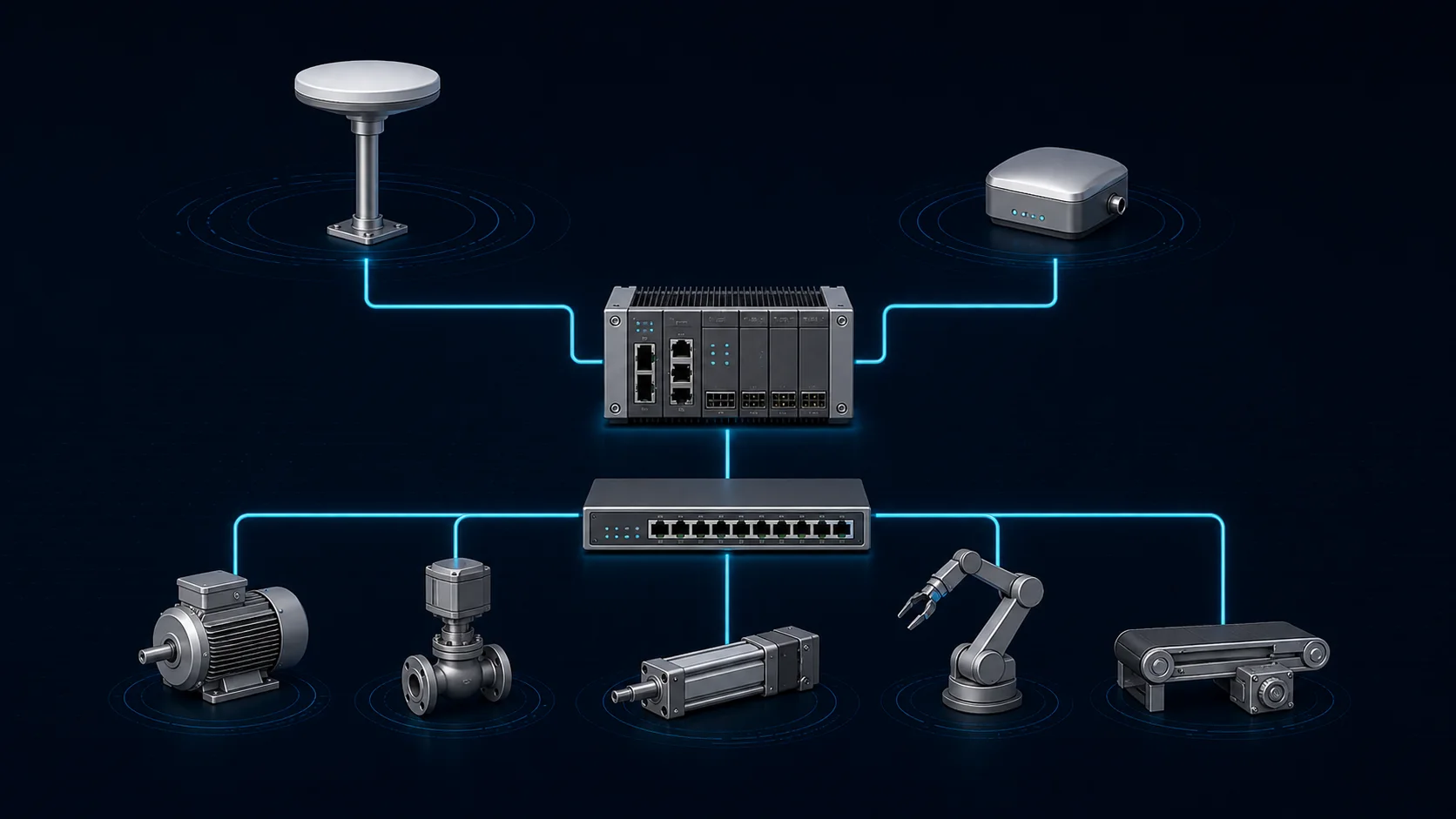
Reference Architecture / Integration: use this diagram to document antenna, receiver, platform control and navigation data relationships. Final suitability remains subject to engineering review.
Why GNSS Integration Matters for Industrial Automation
Start with the operating zone and control role. Identify where the platform moves, how it transitions between open and obstructed areas, which controller consumes navigation data and which alternative sensor or safe state applies when quality falls. Motors, variable-frequency drives, wireless links and steel structures can shape the RF environment, while fixed equipment, outdoor mobile robots and yard vehicles impose different mounting, cable, grounding and service constraints.
Treat antenna placement, receiver configuration and controller logic as one integration problem. Document data semantics, update timing and maintenance access so the control system can respond predictably to degraded or unavailable navigation.
Operating Zones and System Boundaries
Separate outdoor navigation coverage, obstructed transition zones and indoor operation in the requirements. For each zone, record expected status indications, stale-data limits, fallback behavior, service access, EMC investigation and cable separation. Support any environmental or performance statement with verified product information.
System boundary
The antenna, receiver, controller, data path and installation environment should be reviewed as one boundary. A candidate configuration is not a verified assignment to a particular platform.
Engineering teams should maintain a simple requirements register: operating environment, receiver architecture, frequency and constellation needs, mounting, cable and interface constraints, power behavior, service access and evidence status. This register helps distinguish a question that can be answered from verified product data from one that requires an installation or system review.
System Architecture
Signal and data path
Document the path from the RF environment through antenna and receiver to controller and navigation output. Record interfaces, power, timing, status handling and maintenance access.
RF, Interface and Control Integration Challenges
Confirm receiver compatibility, constellation and frequency requirements, interface protocol, timing, power, connectors and mounting envelope. Then define how the PLC, robot controller or edge computer interprets navigation status without implying an unverified accuracy or availability figure.
Installation and RF Environment
Review obstruction, multipath, self-interference, cable routing, grounding, vibration, temperature and service access against verified limits.
A useful plan separates physical installation, receiver configuration and platform software. Define the observations for normal, degraded, loss and recovery states, plus the logs or measurements needed for acceptance. This is a planning method, not a performance guarantee.
GNSS Acceptance Evidence for Industrial Automation
Separate requirements, assumptions and evidence. Record antenna location and cable route, receiver configuration, interface messages, time reference, power behavior, controller validity logic and recovery sequence. Bench and platform tests should define observations, timestamps and pass/fail criteria for nominal reception, degradation, temporary loss and recovery. Conceptual illustrations are not deployment or performance evidence.
For supporting engineering context, review the GNSS anti-jamming technology overview, the product catalogue and the engineering resources. Candidate products still require receiver, interface, installation and environmental confirmation.
Engineering inputs before product selection
| Engineering question | Why it matters | Information needed before RFQ |
|---|---|---|
| Receiver and bands | Determines compatibility and channel planning. | Receiver model, constellations, frequency bands. |
| Mounting and environment | Controls obstruction, vibration, cable and maintenance risk. | Location, envelope, temperature, shock, ingress evidence. |
| Interfaces and power | Connects navigation output to the platform. | Connector, cable, supply, protocol and status behavior. |
| Controller data handling | Defines how automation logic uses valid, degraded or stale navigation data. | Message format, update rate, timing reference, validity flags, timeout and fallback behavior. |
| Acceptance evidence | Turns assumptions into reviewable pass/fail criteria. | Test conditions, expected observations, logs, timestamps, limits and evidence owner. |
What to Document Before a GNSS Integration RFQ
- Define the outdoor, indoor and transition operating zones.
- State the GNSS role in the robot or automation control architecture.
- Identify the receiver, constellations, frequency bands and channel requirements.
- Document mounting, cable, connector, power, grounding and service constraints.
- Define interface messages, timing, validity flags, timeout and fallback behavior.
- Provide quantity, schedule, destination, evidence and documentation requirements.
Frequently Asked Questions
What is this application?
An engineering review scenario for GNSS integration.
What integration problem does it address?
It addresses antenna, receiver, platform interface and installation questions.
What should an engineer confirm before selecting a GNSS anti-jamming antenna?
Confirm receiver, bands, channels, mounting, power, interfaces and environmental evidence.
What information should be included in an RFQ?
Include platform, application, receiver, constraints, quantity, schedule and region.