Multi-Constellation Configuration
A documented constellation combination supports configuration matching during system selection.
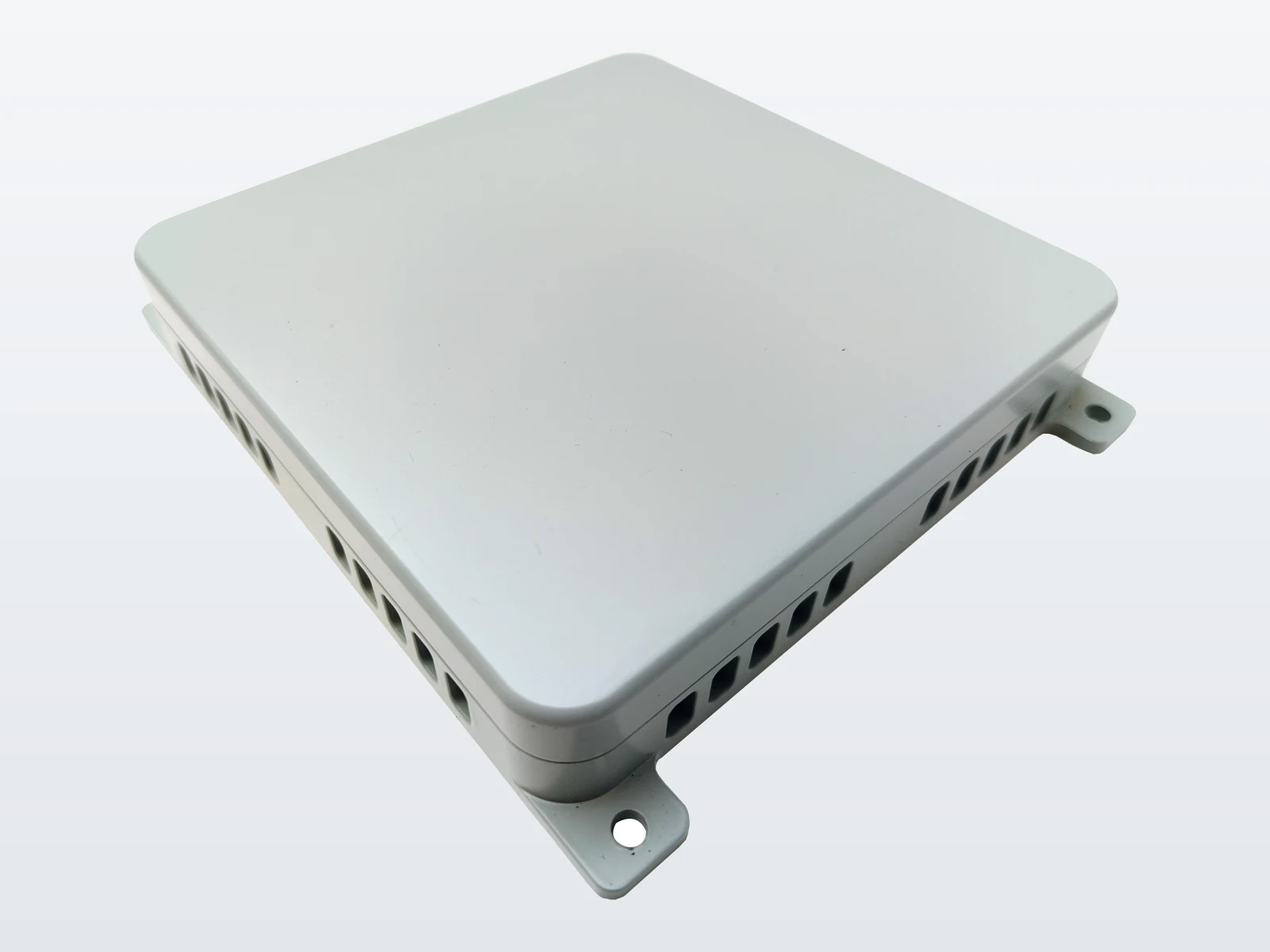 ResiNavAnti-Jamming TerminalsProduct image unavailable
Anti-Jamming Terminals
Compact GNSS Anti-Jamming Terminal
A published four-element, eight-channel BeiDou/GPS terminal with RF-output entries at 1575.42 MHz and 1268.52 MHz. Use the stated record to distinguish an initial match from a requirement that remains unconfirmed.
Documentation: Public datasheet available
PRODUCT OVERVIEW
This anti-jamming terminal provides the antenna-array reception and terminal functions needed between GNSS signals and the receiving navigation system. It is intended for engineering teams comparing terminal configurations for vehicles, marine equipment, industrial systems or custom navigation electronics. Selection should be based on the required signal configuration, receiver architecture, available installation space and the mechanical and electrical constraints of the target platform.
A documented constellation combination supports configuration matching during system selection.
A verified channel configuration is available for receiver and system architecture review.
A verified antenna-element configuration provides a clear basis for comparing models in the series.
ENGINEERING OVERVIEW
The BD record describes a terminal between satellite signals and a receiving navigation system. Use its published RF values for an initial equipment screen; the purchase decision below distinguishes a stated specification from an unresolved requirement.
BD PURCHASE DECISION
Keep RN-009Pro-8CH-BD-WG-DT on the shortlist when its published BeiDou/GPS terminal record and RF-output requirements match the item you intend to buy. The public record lists four antenna elements, eight channels, and RF output frequencies of 1575.42 MHz and 1268.52 MHz. It does not provide a separate named-band list. A numerical output-frequency match is useful evidence, but it is not a complete receiver-compatibility decision.
Use the exact requirement to decide whether the record supports a first-pass match, leaves a question open, or is insufficient for an unconditional compliance statement:
| Example purchase requirement | What the BD record establishes | Decision you can make |
|---|---|---|
| The requested terminal has RF-output frequency entries of 1575.42 MHz and 1268.52 MHz. | Both numerical entries are published. | Retain BD for the next selection stage on this criterion. Do not turn two entries into a claim of two connectors, two simultaneous outputs or a complete signal-to-port map. |
| The receiver brief requires an explicitly named band or signal. | BeiDou and GPS are named as constellations, but the Rev. 0.1 datasheet has no separate band-label row. | Leave that requirement unresolved until the proposed configuration is confirmed. Neither the “BD” suffix nor an RF-output frequency alone supplies the missing signal declaration. Unpublished does not mean unsupported. |
| A hypothetical procurement specification requires a documented maximum consumption of 15 W at normal temperature. | The published limit is ≤17 W at normal temperature. | Do not mark the 15 W requirement as met using this record. The 17 W limit does not prove every unit always draws 17 W, but it does not establish the stricter limit either. Keep the offer conditional or compare a documented alternative. |
The BD datasheet describes a terminal between GNSS signals and a receiving navigation system. Its RF-output entries—also including −70 to −60 dBm and 50 Ω—are not a declaration of a navigation data interface. Do not specify NMEA position messages, a timing output, input voltage or mating connectors on the strength of those RF values. The public record does not establish those deliverables; agree the offered scope separately.
For a side-by-side variant decision, use the published G1 and BD comparison. It already compares the stated signal, physical and power records. A different suffix is not approval to substitute one model for the other. If the product role itself is unclear, the antenna-versus-terminal guide explains the boundary without assuming a built-in receiver.
Download the English BD datasheet (PDF, Rev. 0.1). Its full published specifications remain below. Mechanical drawings, connector details, supply-input limits and applicable test records are separate requests whose availability must be confirmed.
Use Request a Quote with this exact model and identify the one requirement that changes the buying decision. For example, name the required signal or state the hard consumption limit; do not replace either with “8-channel GNSS.” Use the existing RFQ preparation section for the remaining project information.
INTEGRATION & INSTALLATION
Detailed mounting, interface and integration information is available during technical evaluation.
VERIFIED SPECIFICATIONS
All verified parameters are grouped in one continuous product datasheet for engineering review.
APPLICATION SCENARIOS
These are application contexts, not customer installations or completed projects.

Navigation equipment integration within commercial vehicles and autonomous system architectures.
View application
Navigation equipment selection for commercial vessels, survey platforms and marine electronics.
View application
Receiver and navigation integration within automation, robotic and industrial control equipment.
View application
Configuration review for purpose-built navigation electronics and platform-specific constraints.
View applicationREQUEST A QUOTE
Sharing these details helps engineering review the documented configuration against the intended integration.
DOCUMENTATION
Download the public English RN-009Pro-8CH-BD-WG-DT datasheet (PDF, Rev. 0.1). Ask separately whether mechanical drawings, connector/interface details and applicable test records can be supplied for the proposed configuration.
PRODUCT FAQ
The verified product record lists BeiDou and GPS, with 4 antenna elements and 8 channels for this configuration.
The verified record lists at least 105 dBc with 1 interferer and at least 95 dBc with 3 interferers. Documented interference types include narrowband high-power, wideband spectrum-matched, pulse, swept-frequency and mixed interference.
The verified record lists dimensions of 150 × 130 × 26.5 mm, weight of no more than 500 g, and power consumption of no more than 17 W at normal temperature. RF output is documented at 1575.42 MHz and 1268.52 MHz, with power from −70 to −60 dBm and 50 Ω impedance.
Confirm receiver compatibility, required constellations and bands, available installation space, mounting arrangement, power requirements, cable routing and environmental requirements during engineering review.
REQUEST A QUOTE
Use the product-specific RFQ to share receiver, installation and project requirements with the engineering team.